
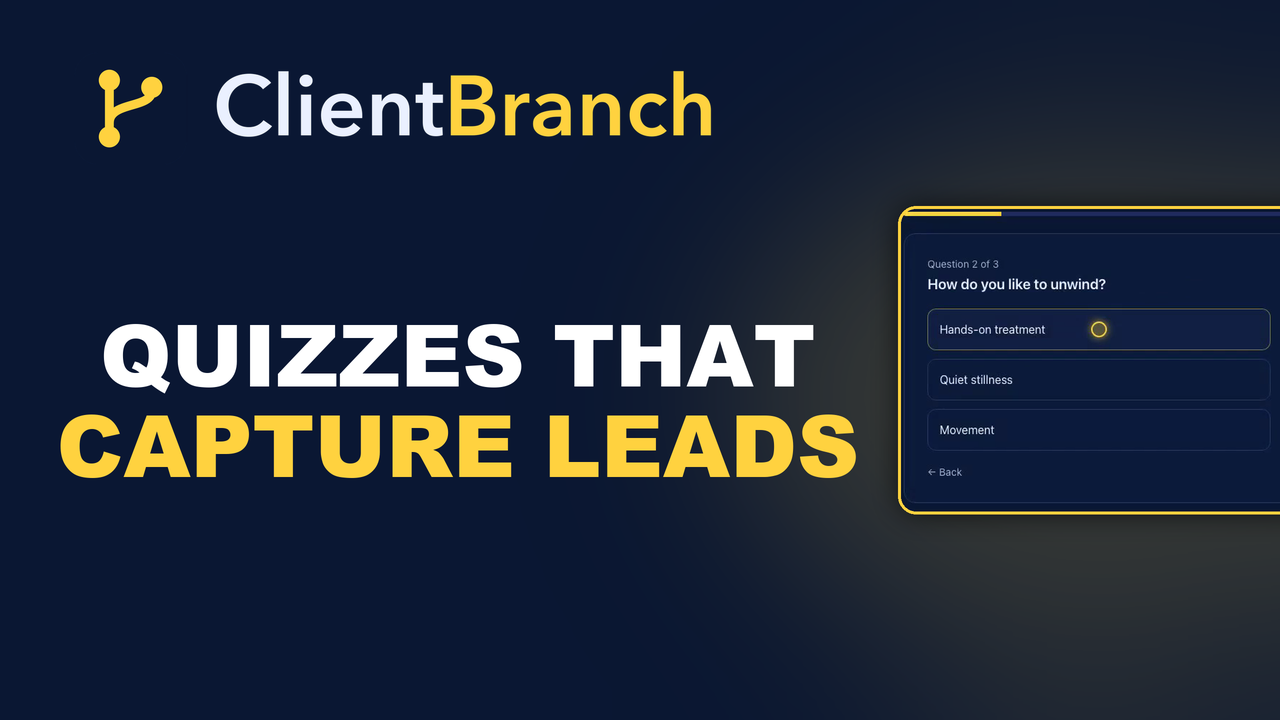
Nobody Wants Your Checklist, But They Will Take The Quiz
The lead magnet everybody downloads and nobody reads has had its day. A quiz earns attention instead of asking for it, and hands you a tagged contact at the end.
Somewhere on your website there is a PDF nobody opens. Seven Tips For Something. You wrote it, you meant it, and it converts at a rate that would depress you if you ever went and looked.
The problem is not the writing. It is that a downloadable guide asks for an email before it gives anything, and everybody knows how that story ends. They are not swapping their address for a document they will not read.
A quiz reverses the order. It gives first, and it gives something a guide never can: an answer about them.
Why people finish quizzes
Almost nobody wants more information. Almost everybody wants to know which thing they are.
That curiosity is not a trick, and it does not wear off. Somebody halfway through three questions about their own back pain is genuinely invested by the time they reach the end, in a way that somebody who clicked a download link never is.
Three ways to start
In ClientBranch, quizzes live under Sites, and a new one gives you three starting points.
A blank quiz if you know exactly what you want. A graded assessment, where every answer carries points and the total drops the visitor into a result tier. Or a personality quiz, where each answer feeds a category and the top category wins.
Graded works when there is a right answer and a spectrum: how ready are you, how overdue is this, how much risk are you carrying. Personality works when there is no better or worse, only different: which treatment, which program, which type are you.
The engine is the points column
Pick the graded template and you get questions already built, each answer with a points box next to it.
That number is the whole machine. It decides which result somebody lands on, so a worse answer earns a higher score. Five points for the answer that says they are struggling, one for the answer that says they are fine.
Then you build tiers: a band of points with a result attached, so everybody who scores inside that band sees the same answer. Name the tier, and write the headline they will read when they get there.
Write the result like a person, not a report
This is where most quizzes lose their audience at the last moment. Somebody answers three thoughtful questions and gets back a screen that says "Category B".
Write the result the way you would say it out loud to that person. Tell them what you think is going on, why, and what the sensible next step is. That is the payoff they earned, and it is also your best sales conversation, delivered at the exact moment they are listening.
The bit that turns a quiz into marketing
Lead capture sits just before the result. Not on the first screen, not in a popup. Right at the point where somebody has answered everything and wants their answer.
That timing is the single most important design decision in the whole feature. Ask on screen one and most people leave. Ask at the end and the exchange feels completely reasonable, because it is: they give you a name and an email, you give them something they want.
First name and email are always asked for. You can add a phone number, though the more you ask for the more people quietly close the tab.
Publishing gives you a link, not a project
Press publish and you get a link. Paste it in an email, put it in your social bio, print it as a QR code on a poster in reception. There is no page to build and nothing to embed unless you want to.
What happens after they press the button
Here is the part most quiz tools leave out, and the reason to build it inside your CRM rather than as a standalone toy.
The person becomes a contact. They are tagged as a quiz lead, and tagged with the result they got. So the answer they gave is now a label you can filter and send to.
That means you can email everybody who came out the same way, with a message written for that answer, without sorting a single name by hand. It also means the next time you speak to them, you already know what they told you.
Every answer is kept
The submission itself is logged under Forms, with their name, their email and which quiz they took. You know what somebody said before you ever speak to them, which changes the quality of a first conversation more than any script will.
Three questions is the sweet spot. Long enough to feel personal, short enough to finish. Every question you add past about five costs you completions, and the extra data almost never earns its keep.
If you are struggling to cut it down, ask what you would do differently with the answer. If the honest answer is nothing, that question is decoration.
Personality or graded, decided in one sentence
If the answers describe different kinds of person, use categories. If they describe more or less of the same thing, use points and tiers.
Which treatment is right for you is a category quiz. How overdue is your massage is a graded one. Getting this backwards is the most common reason a quiz feels slightly off to the person taking it: they can sense they are being ranked when they should be being described, or described when they wanted a verdict.
What it costs you to run
Nothing per response. There is no per-lead fee, no cap on submissions and no separate quiz tool subscription, because it is part of the platform your contacts already live in.
That is worth checking wherever you build one. A quiz that converts well and charges per capture has a habit of becoming expensive at exactly the moment it starts working.
Where to point it
The result page can carry a button, and it should. Send them to your booking page, your consultation form, or the product that matches what they got.
You have just told somebody something true about themselves. The natural next question is what to do about it. Answer it.
Start your free trial and build one this afternoon.
Try ClientBranch free for 15 days
Get booked, get paid, and keep clients coming back, all from one place. No card required, cancel anytime.
Start my 15-day free trial